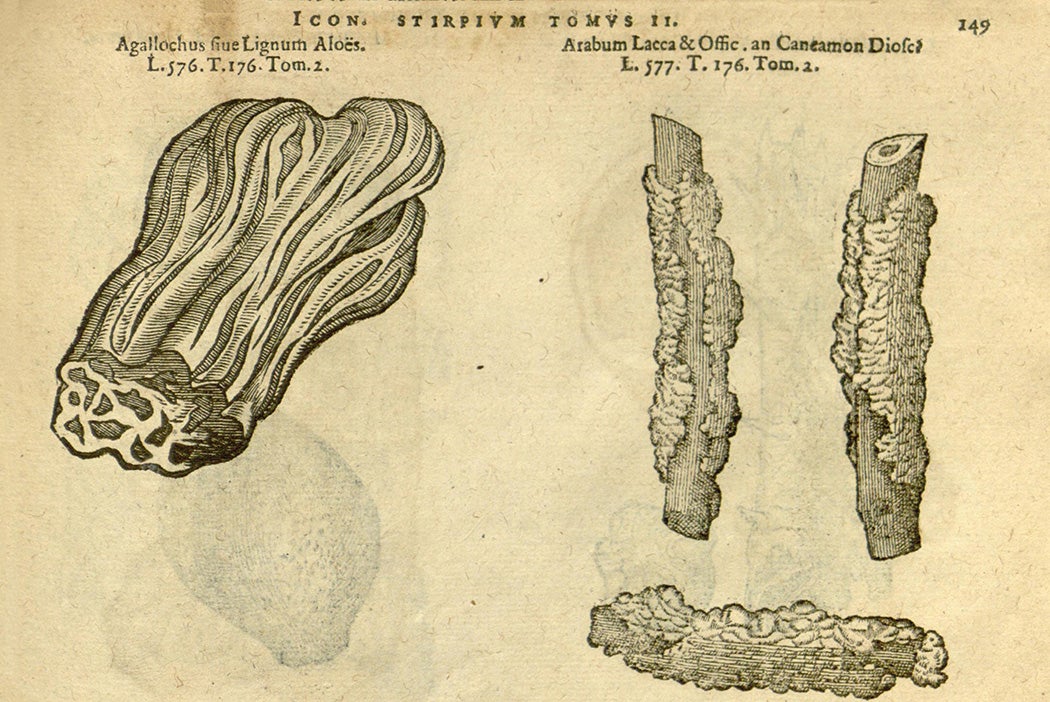
The formation of agarwood in the do gourd trees contains many mysteries. According to folklore: Agarwood incense is created by heavenly scent flying with the wind to land on the wound on the trunk of the tree and mix with the resin flowing from the wound. Then, forged over time by good soil, sunshine, wind, sea and other special natural conditions. Agarwood is considered the Spirit of Heaven and Earth. That's according to folklore, but how does science explain it?

Contrary to common understanding, people are confused, agarwood is not the name of a plant. Agarwood is the wood containing many aromatic resins born from the trunk of the Aquilaria crassna, which grows a lot in the old forests of Vietnam. Agarwood tree is the short way people call Aquilaria crassna to create agarwood. During the process of growth and development, the tree can be eaten by termites, insect pests. Heavy rain, strong wind or the effects of nature create wounds on the tree trunk. Those wounds must be soaked with water through a rainy season before the tree begins to secrete a resin that surrounds the wound to resist infection from the outside.
Over time, the resin gradually thickens, bringing a scent that attracts a rare species of ant. It is a tall, yellow or black ant. This ant is hard to find, it carries a special fungus and comes to eat tree sap. Then accidentally transplanted into that plastic layer, fungi create agarwood. This fungus interacts with the active ingredients of the resin layer, under the influence of the outside climate and the interaction takes place for a very long time, it will produce a special essential oil, which is agarwood. The longer the interaction, the more valuable it is. With the Aquilaria Crassna, there are eyes on the trunk of the tree, those eyes are the vestiges of an insect chiseled into the tree trunk, folk call it a bougainvillea.
Over tens to hundreds of years, under the aura of heaven and earth, the wood cells gradually transform into light brown, gray, indigo, black with many different hard and flexible textures; with very specific oil veins on the bass wood. This is because the deposited oil gradually denatures. The trees that have agarwood are usually fibrous trees and have tumours, tumors, borers, termite mounds, shrapnel from bombs and bullets, broken branches or struck by lightning. Agarwood that has been aged for a long time will have a clearer and stronger scent. Natural Agarwood has an essential oil concentration ranging from 25-80%, of which the most advanced type reaches 60-80%. Many people still think that any tree can produce agarwood. But the truth is not so. In the natural forest, it is estimated that out of 1,000 to 1,500 trees, there may be only 1 Agarwood tree.
Agarwood, according to the Chinese characters, means sinking, while incense is a fragrance, right from the name, it describes the scent characteristics, as deep as the virtues of a gentleman, unobtrusive but ethereal and persistent. And the southern wonders are the miracles of the South; People named it so to show pride in this rare and hard to find wood. Agarwood contains many sesquiterpene compounds, which have a separate structure and cannot be artificially synthesized. Natural products and essential oils extracted by steam distillation are used to produce high quality incenses and perfumes as well as in traditional medicine.
Classification of
According to Dr. Le Cong Kiet, the evaluation criteria for Agarwood is usually based on: Origin, shape, size, color, scent, weight, density, purity and type of tree produced. it. In trading transactions, the classification of Agarwood is largely based on the perception, experience, consensus between the two parties through seeing, touching, burning, tasting, smelling... Agarwood is very diverse, mostly Currently, it is divided into 4 types: Southern States, Agarwood Roots, Agarwoods, and Acceleration.
Aquilaria Crassna Pierre
This is the most special and rarest type of Agarwood. The price of the Aquilaria Crassna Pierre Agarwood is very high, possibly up to billions of dong. Ky Nam is soft, flexible, and pure, when tasting full of sour, spicy, bitter and sweet taste; Natural fragrance with blue smoke, straight and long.
Bai Ky: ivory white, light gray, extremely rare, very oily and soft
Black period: indigo black, tar and hard
Fluorescent: dark yellow or golden brown color like beeswax resin, heavy and hard
Thanh Ky: gray-blue color, green light
Ancient books classified the male period in order of value: "Nhat Bach, Nhi Thanh, Tam Huynh, and Tu Ha".
Roots Agarwood
Roots Agarwood is also known as type 1 agarwood. This is a type of agarwood with similar properties to the male period but not as perfect as the male period. Roots Agarwood are formed from the roots of Aquilaria Crassna, completely submerged in water. Grade 1 agarwood is very good for health, difficult to exploit, rare, so it has high economic value.
Ant Nest Agarwood
Ant Nest Agarwood are type 2 of agarwood, often with holes and caves created by ants before the tree becomes agarwood. Ant Nest Agarwood are submerged in water, not completely like Roots Agarwood. This is also a rare type of Agarwood in nature and has a price of several hundred million or more.
- Green ants: often found on the trunk of the tree, dark green, hard.
- Ant scorpion: softer, has many shapes.
- Needle ants: run with small, flat ridges, like the seam of a sewing needle.
- Wall ants: eat according to the pattern of a house, it looks like the wall of a building.
- Thorny ant: also known as the old tree ant, also known as the grandfather ant, because the ant eats between the intestines of the do tree, runs the veins.
- Hole ants: eat holes in the gut of the tree.
- White ants: call by color, have the highest price because of good bass quality.
- Black ants smack: there is only agarwood at both ends, the middle of the body is full of rice; In the world of carrying, it is also known as ant evil.
Tock Agarwood
Tock Agarwood is almost contaminated with very little oil, so it is rated as the lowest grade of agarwood; mainly in the form of floating agarwood, agarwood oil is closed from the outside and long along the wood grain of Aquilaria Crassna. Solid Agarwood, no holes, and caves. Tock Agarwood is the most popular on the market today. Agarwood has many different selling prices, ranging from a few hundred to several million dongs.
There are several dozen types of speed such as:
- Tock Flower: pale yellow color, with speckled dots like flowers.
- Tock Water : light yellow color, wet and heavy substance.
- Tock Gray: gray-blue color like ash.
- Tock Slow: black as soot.
- Tock Rock: heavy and looks like a rock.
- Tock Quick: pale yellow color, spicy like Siamese chili.
- Huong Tock: pale yellow color, strong fragrance, often surrounds the male period, so at some points, many male veins are mixed in.
Characteristics of Agarwood
Colour
Agarwood is an essential oil produced from the sap of Aquilaria Crassna when it is injured. Therefore, depending on the degree of oil contamination of the wood, agarwood has different colors.

The color of agarwood is displayed by the agarwood color palette
The wood of Aquilaria crassna is very light, porous, and has an ivory white color. Depending on the amount of oil contaminated with the wood, the color changes. From gray, brown gradually turns to black with different shades. The more oil, the darker and heavier the seed. When a certain level of oil is reached, the agarwood will sink, usually over 40%; It is often called type 1 agarwood or submerged agarwood.
Fragrant
Agarwood has a very unique smell, unlike the scent of other woods. This is also the most accurate method to distinguish agarwood. Depending on the soil, climate, altitude, and tree varieties, agarwood produces different scents. Basically, a block of wood with a lot of agarwood essential oil when burned will smell a deep sweetness, a warm aroma, not dark or strong, agitated, deposited and long-lasting. Low smoke is white, flying vertically.
With the mutant agarwood blocks, with a living aroma, the smell of agarwood will be mild and cool like the smell of honey mixed with flowers, it is difficult to describe all the aftertaste of the natural scent of agarwood. There is one thing to note, when burning agarwood pieces or blocks to check the quality, you should burn it in a blue flame, choose areas with a lot of oil and lightly burn to create smoke. Only then can you fully enjoy the taste of nature's gift. Absolutely do not burn into fire, because if burned like that, it will burn oil, cause burning, the aroma of agarwood will be affected, the quality will be greatly reduced, no longer accurate.
The value of Agarwood
Unlike other trees, the quality of agarwood is not based on the age of the tubers but on the age of the disease. Depending on the "location" of each tree, the quality of Agarwood will vary. Each plant will have a unique color, flavor and taste. So if calculating the value of agarwood by "age" is not accurate. The quality of agarwood is measured by the aroma and content of the essential oil contained in the wood. If the above two factors are missing, even though the tree is 1000 years old, but if it does not produce agarwood, the tree will not have any value.
With agarwood family, who have been attached to agarwood for their whole life, with rich experience, they will never cut down those trees if they do not see signs of agarwood birth. The old trees but healthy bodies will not be exploited, very wasteful. They are often kept for seed collection as well as for shade. Because Aquilaria crassna trees, if it does not produce agarwood, will only be used to make firewood or paper. Because the wood is very soft, porous and light; The quality is not good to make handicrafts like other types of wood. Many people still say: Having to suffer injuries to turn into agarwood is the cause and condition of the Aquilaria crassna, born like that.
Distribution of frankincense
In the world, agarwood is concentrated mainly in 6 countries: Vietnam, Laos, Cambodia, Myanmar, Indonesia, Malaysia, in which Vietnamese agarwood has the best pharmacology. Recent scientific studies on agarwood by Japanese and Chinese scientists also confirm that Vietnamese agarwood has many active ingredients that agarwood in other places does not have.
- Vietnamese Agarwood: Nha Trang, Hue, Phu Yen (Hong Tho), Quang Ngai (Southern period, agarwood, red earth).
- Chinese Agarwood: Cantonese incense, Hainan incense, Hong Kong incense, Guangxi, Yunnan, Taiwan.
- Indonesian Agarwood: Agarwood from Illion province, Aceh province, Sumatra island, Sulawesi island, Lombox province, An Han island, Kalimantan island.
- Agarwood from Laos: Luang Prabang, Champasak, Aso Po.
- Cambodian Agarwood.
- Thai Agarwood.
- Burmese Agarwood.
- Filipino Agarwood.
- Brunei frankincense.
- East Timor Frankincense.
- Malaysian Agarwood.
- Agarwood Papua New Guinea
Agarwood systems
- Hue An:
- Meet up place: Hoi An - Vietnam.
- Agarwood production areas: Vietnam, Laos, Myanmar, Cambodia, Thailand, India
- Quan Huong:
- Meet up place: Dong Quan.
- Agarwood production areas: Hai Nam, Hong Kon, Quang Tay.
- Tinh Chau:
- Meet up location: Singapore.
- Agarwood production areas: Indonesia, Malaysia, Philippines, Brunei, Papua New Guinea.
Dân gian tương truyền: Trầm hương là do Hương Trời bay theo gió đáp vào chỗ bị thương trên thân cây dó bầu hòa vào nhựa chảy từ vết thương ấy. Sau đó, được hun đúc qua thời gian bởi đất tốt, nắng, gió, biển và các điều kiện tự nhiên đặc biệt khác. Trầm hương được coi là Linh Khí của Đất Trời. Đó là nói theo dân gian, còn khoa học giải thích như thế nào?
Nguồn gốc của Trầm hương
Khác với hiểu biết thông thường mọi người đang nhầm lẫn, Trầm hương không phải tên một loại cây. Trầm hương và Kỳ nam thực chất là phần gỗ chứa nhiều nhựa thơm được sinh ra từ thân cây dó bầu, mọc nhiều trong những cánh rừng già của Việt Nam. Cây Trầm hương là cách người dân gọi ngắn gọn cây Dó bầu tạo Trầm hương. Trong suốt quá trình sinh trưởng và phát triển, cây dó có thể bị mối mọt, côn trùng sâu hại ăn thân. Mưa to gió lớn hay những tác động của tự nhiên tạo ra những vết thương trên thân cây. Những vết thương đó phải đọng nước qua một mùa mưa, cây dó mới bắt đầu tiết ra chất nhựa bao xung quanh vết thương để kháng cự sự phá hoại nhiễm bệnh từ bên ngoài.
Theo thời gian, chất nhựa dần đặc lại, mang mùi hương thu hút một loài kiến quý hiếm. Đó là loài kiến cao cẳng, màu vàng hoặc màu đen. Loài kiến này rất khó tìm, nó mang trong mình loại nấm đặc biệt và đến ăn nhựa cây. Rồi vô tình cấy vào trong lớp nhựa ấy khuẩn nấm tạo trầm. Loài nấm này tương tác với các hoạt chất của lớp nhựa, dưới tác động của khí hậu bên ngoài và sự tương tác diễn ra trong một thời gian rất dài sẽ sinh ra một loại tinh dầu đặc biệt, chính là Trầm hương. Tương tác càng lâu trầm càng có giá trị. Với cây dó cho trầm chi chít những mắt trên thân cây, những mắt chi chít đó là vết tích do một loài côn trùng đục vào thân cây, dân gian gọi nó là con bù xè.
Trải qua hàng chục đến hàng trăm năm, dưới linh khí trời đất, các tế bào gỗ chuyển hóa dần thành màu nâu sáng, xám, chàm, đen với nhiều kết cấu dẻo, cứng khác nhau; cùng những vân dầu rất riêng trên phần gỗ trầm. Đây là do chất dầu đọng lại dần biến tính mà thành. Những cây dó có trầm hương thường là cây bị xơ xác và thân có u, bướu, bị sâu đục, gò mối đóng, mảnh bom đạn ghim vào, cây bị giông gió làm gãy cành hay bị sét đánh. Trầm lâu năm sẽ có mùi hương rõ và đậm hơn. Trầm hương ngoài tự nhiên có nồng độ tinh dầu dao động từ 25 - 80%, trong đó loại cao cấp nhất đạt tới 60 - 80%. Nhiều người vẫn nghĩ cây dó bầu nào cũng có thể sinh ra trầm. Nhưng sự thật không phải như vậy. Trong rừng tự nhiên, theo ước tính trong 1.000 đến 1.500 cây dó bầu may ra mới có 1 cây tạo trầm.
Trầm theo chữ Hán là chìm, còn hương là mùi thơm, ngay từ tên gọi đã diễn tả khái quát về đặc trưng mùi hương, thâm trầm như đức hạnh của người quân tử, không phô trương mà thanh tao, bền bỉ. Còn Kỳ nam là điều kỳ diệu của phương Nam; người dân đặt tên như vậy để thể hiện niềm tự hào về loại gỗ hiếm có khó tìm này. Trầm hương có chứa nhiều hợp chất Sesquiterpene, loại chất có cấu trúc riêng biệt và không thể tổng hợp nhân tạo. Sản phẩm tự nhiên và tinh dầu trầm được chiết xuất theo phương pháp chưng cất lôi cuốn hơi nước được sử dụng để sản xuất các loại hương, nước hoa chất lượng cao cũng như trong y học truyền thống.
Phân loại Trầm hương
Theo Tiến sĩ Lê Công Kiệt, tiêu chuẩn đánh giá Trầm hương thường dựa vào: Nguồn gốc xuất xứ, hình thù, kích cỡ, màu sắc, mùi hương, trọng lượng, tỷ trọng, độ tinh khiết và loại cây dó bầu tạo ra nó. Trong giao dịch mua bán, việc phân loại Trầm hương phần lớn dựa vào cảm nhận, kinh nghiệm, sự đồng thuận giữa đôi bên thông qua việc nhìn, sờ, đốt, nếm, ngửi... Trầm hương rất đa dạng, phần lớn hiện nay được chia làm 4 loại: Kỳ nam, trầm rễ, trầm kiến, trầm tốc.
Kỳ nam
- Bạch kỳ: sắc trắng ngà, xám nhạt, cực kì hiếm gặp, rất nhiều dầu và chất mềm
- Hắc kỳ: sắc đen chàm, hắc ín và cứng
- Huỳnh kỳ: sắc vàng sẫm hoặc vàng nâu giống nhựa sáp ong, nặng và cứng
- Thanh kỳ: sắc xanh xám, ánh lục
Trầm rễ
Trầm kiến
Trầm kiến là trầm loại 2, thường có lỗ, có hang do kiến đục làm tổ trước khi cây thành trầm. Trầm kiến chìm lửng trong nước chứ không chìm hoàn toàn như trầm rễ. Đây cũng là loại trầm khá quý hiếm trong tự nhiên và có mức giá từ vài trăm triệu trở lên.
- Kiến xanh: thường có trên thân cây dó bầu, sắc xanh đậm giống màu xanh cổ vịt, cứng
- Kiến điệp: mềm hơn, có nhiều hình dạng
- Kiến kim: chạy đường vân nhỏ, dẹp, giống đường kim may
- Kiến vách lầu: ăn theo đường vân có hình nhà tầng, trông giống như vách nhà lầu xây
- Kiến gai: hay còn gọi là kiến cây trường lão, còn có tên là kiến ông, do kiến ăn giữa ruột cây dó, chạy sợi vân
- Kiến lỗ: ăn đục thành từng lỗ trong ruột cây dó
- Kiến trắng: gọi theo màu sắc, có giá tiền cao nhất vì tạo chất lượng trầm tốt
- Kiến đen đụp: chỉ có trầm ở hai đầu, giữa thân toàn là cơm; trong giới đi địu còn gọi là kiến tà ha
Trầm tốc
Có khoảng vài chục loại tốc như:
- Tốc hoa: sắc màu vàng lạt, có những chấm lốm đốm như hoa
- Tốc nước: sắc màu vàng lợt, chất ươn ướt và nặng
- Tốc xám: sắc màu xanh xám như tro
- Tốc lọ nghẹ: sắc màu đen như bồ hóng
- Tốc đá: nặng và trông hình sắc như đá
- Tốc ớt: sắc vàng lợt, vị cay như ớt xiêm
- Tốc hương: sắc vàng lợt, hương đượm, thường bao chung quanh Kỳ nam nên ở một vài điểm, nhiều gân Kỳ nam trộn lẫn vào
Đặc điểm của Trầm hương
Màu sắc
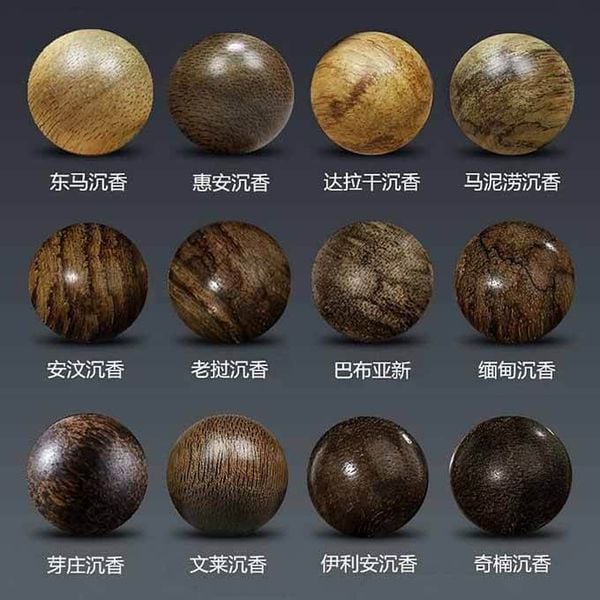
Màu sắc của Trầm hương được hiển thị bằng bảng màu hạt trầm (Ảnh minh họa. Nguồn: Internet)
Gỗ cây dó bầu bản chất rất nhẹ, xốp, có màu trắng ngà. Tuỳ theo lượng dầu trầm nhiễm vào gỗ mà màu sắc có sự thay đổi. Từ màu ghi, nâu chuyển dần sang đen với các sắc độ khác nhau. Càng nhiều dầu thì hạt càng sẫm màu và nặng. Khi đạt tới một mức độ dầu nhất định thì Trầm hương sẽ chìm nước, thường là trên 40%; người ta thường gọi là trầm loại 1 hay trầm chìm.
Mùi hương
Giá trị của Trầm hương
Với phu trầm là người cả đời gắn bó với Trầm hương, dày dặn kinh nghiệm, họ sẽ không bao giờ đốn hạ các cây dó nếu không thấy dấu hiệu sinh trầm. Những cây dó có tuổi đời cao nhưng cơ thể khỏe mạnh sẽ không bị khai thác, rất lãng phí. Chúng thường được giữ lại để lấy thu hạt lấy giống cũng như cho bóng mát. Vì cây dó bầu nếu không tạo ra trầm sẽ chỉ để làm củi đốt hoặc giấy. Do gỗ dó rất mềm, xốp và nhẹ; chất lượng không tốt để chế tác thành các mặt hàng thủ công mỹ nghệ như các loại gỗ khác. Nhiều người vẫn nói: Việc phải chịu những tổn thương để biến thành Trầm hương là nhân, là duyên của cây dó bầu, sinh ra vốn như vậy.
Phân bố Trầm hương
Trên thế giới, Trầm hương tập trung chủ yếu ở 6 nước: Việt Nam, Lào, Campuchia, Myanmar, Indonesia, Malaysia; trong đó trầm Việt Nam có dược lý tốt nhất. Những nghiên cứu khoa học mới đây về trầm của các nhà khoa học Nhật Bản và Trung Quốc cũng xác nhận trầm Việt Nam có nhiều hoạt chất mà trầm các nơi khác không có.
- Trầm hương Việt Nam: Nha Trang, Huế, Phú Yên (Hồng Thổ), Quảng Ngãi (kỳ nam, trầm hương, hồng thổ)
- Trầm hương Trung Quốc: Hoàn hương Quảng Đông, trầm hương Hải Nam, trầm hương Hồng Kông, Quảng Tây, Vân Nam, Đài Loan
- Trầm hương Indonesia: Trầm hương tỉnh Illion, tỉnh Aceh, đảo Sumatra, đảo Sulawesi, tỉnh Lombox, đảo An Hán, đảo Kalimantan
- Trầm hương Lào: Luang Prabang, Champasak, Aso Po
- Trầm hương Campuchia
- Trầm hương Thái Lan
- Trầm hương Myanmar
- Trầm hương Philipin
- Trầm hương Brunei
- Trầm hương Đông Timo
- Trầm hương Malaysia
- Trầm hương Papua New Guinea
Các hệ Trầm hương
- Hệ Huệ An
- Nơi tập trung: Hội An - Việt Nam
- Khu vực sản xuất trầm hương: Việt Nam, Lào, Myanmar, Campuchia, Thái Lan, Ấn Độ
- Hệ Quan Hương
- Nơi tập trung: Đông Quan
- Khu vực sản xuất trầm hương: Hải Nam, Hồng Kông, Quảng Tây
- Hệ Tinh Châu
- Nơi tập trung: Singapore
- Khu vực sản xuất trầm hương: Indonesia, Malaysia, Philipin, Brunei, Papua New Guinea