Container Icon

Sâm Lai Châu là gì? Đặc điểm của sâm Lai Châu


Sâm Lai Châu (Panax vietnamensis var. fuscidicus) là loài cây thuốc quý hiếm với thành phần saponin phong

phú và có giá trị kinh tế cao của Việt Nam. Mặc dù là loài cây thuốc quý hiếm, có giá trị kinh tế, giá trị phòng bệnh và bồi bổ sức khoẻ cao, nhưng công tác bảo tồn và phát triển trồng quy mô hàng hoá chưa thực hiện được.

Sâm Lai Châu là gì?

Sâm Lai Châu (P. Vietnamensis var. fuscidiscus K. Komatsu, S. Zhu & S.Q. Cai) là một thứ (bậc phân loại dưới loài) của sâm Ngọc Linh. Còn được gọi là Tam thất hoang Mường Tè, Tam thất đen… Theo Sách Đỏ Việt Nam (2007) đây là nguồn gen đặc biệt quý hiếm đối với Việt Nam và thế giới.

Sâm lai châu

Chúng có vùng phân bố hẹp, được tìm thấy ở độ cao 1.400-2.200 m trên dãy núi Pu Si Lung và lân cận (Mường Tè và Tây Sìn Hồ, giáp biên giới với Trung Quốc) và dãy núi Pu Sam Cáp nằm giữa các huyện Sìn Hồ và Tam Đường với thành phố Lai Châu. Nhiệt độ từ trung bình từ 18-20oC. Sâm Lai Châu là loài cây thuốc quý hiếm, bị đe doạ tuyệt chủng ở mức độ trầm trọng

Đặc điểm của sâm Lai Châu

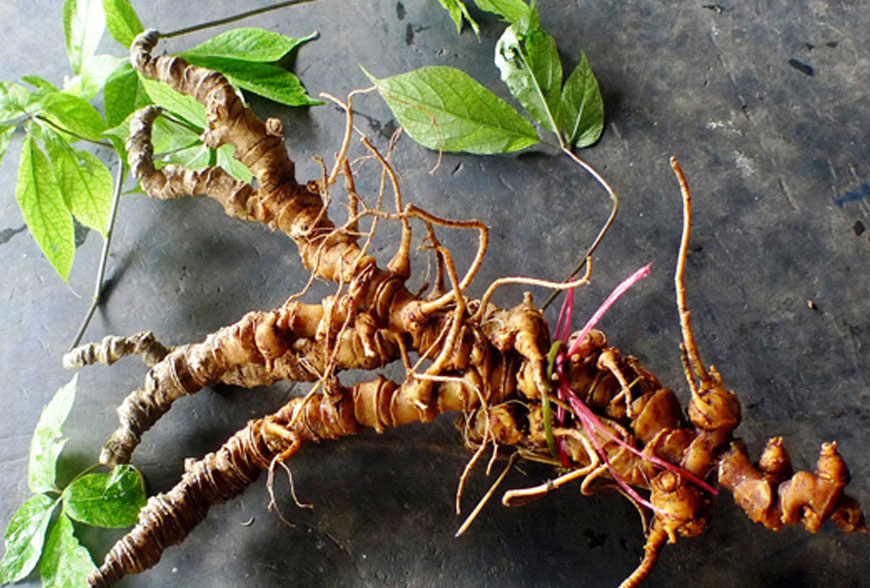
Sâm Lai Châu có hình thái tương tự Sâm Ngọc Linh, thân củ có mắt đốt sole nhau, lá tròn không sẻ thùy hai mặt lá có lông, hạt có 1 chấm đen. Sâm có mùi thơm đặc trưng có vị đắng ngọt vị lưu lại rất lâu khi ăn. Tùy vào thổ nhưỡng, vùng miền địa lý mà ra nhiều hay ít đốt. Có cây sâm mọc củ, vài năm sau mới bắt đầu ra đốt, có cây mỗi năm củ mọc 2-3 đốt, có củ còn mọc thành nhiều nhánh, mỗi nhánh ra vài đốt một năm.

Sâm lai châu

Hình dáng của quả Sâm có hình giống quả thận khi chín có màu hồng hay màu cam hoặc vàng. Quả Sâm cũng có nhiều tác dụng chữa bệnh.

+ Thành phần có trong Sâm Lai Châu

Củ sâm Lai Châu có thành phần saponin phong phú với 52 loại hoạt chất quý hiếm tương tự như sâm Ngọc Linh. Các kết quả định lượng bằng phương pháp cân cho thấy hàm lượng saponin toàn phần trong các mẫu sâm Lai Châu đạt khoảng 20%, kết quả định lượng saponin tổng số của sâm Lai Châu và tăng dần khi tăng số tuổi, đồng thời mẫu thu được ở tự nhiên có hàm lượng saponin tổng số (trung bình khoảng 23%) cao hơn mẫu trồng (trung bình khoảng 18,47%).

+ Công dụng của Sâm Lai Châu

Những năm gần đây, nhu cầu trong nước và Quốc tế về dược liệu có nguồn gốc từ thảo dược để điều trị bệnh, bồi dưỡng sức khoẻ là rất lớn. Việc khám chữa bệnh bằng phương pháp y học cổ truyền kết hợp với y học hiện đại được sử dụng rộng rãi. Theo một số tài liệu nghiên cứu, Sâm Lai Châu có nguồn gen đặc biệt quý hiếm đối với Việt Nam và thế giới. Tất cả bộ phận của cây đều có thể dùng làm thuốc.

Thân rễ thường được dùng làm thuốc bổ, cầm máu, tăng cường sinh lực, chống stress. Lá, nụ hoa dùng làm trà uống có tác dụng kích thích tiêu hoá, an thần. Sâm Lai Châu có vị ngọt, hơi đắng, tính ôn, có tác dụng gần giống với tác dụng của nhân sâm.

Sâm lai châu

Trong thân rễ Sâm Lai Châu có saponin “MR2” chiếm tỉ lệ lớn, đặc trưng có trong Sâm Ngọc Linh. Chính vì vậy giá trị kinh tế trên thị trường của Sâm Lai Châu rất cao. Giá thu mua 01 kg sâm tươi giá trung bình 20 triệu đồng/kg, 01 kg sâm tươi 10 tuổi giá khoảng 50 triệu đồng, những lúc khan hiếm có thể lên tới 60-70 triệu đồng/kg.

Sâm Lai Châu còn giúp tăng nội tiết tố sinh dục, tăng tạo hồng cầu, điều hòa nhịp tim, bình ổn huyết áp, tăng trí lực, thị lực. Giúp người sử dụng thêm minh mẫn; chống lão hóa, chống ôxy hóa, tăng cường dẻo dai, cải thiện sự suy nhược thần kinh

Hỗ trợ rất tốt với thuốc chữa ung thư, tăng sức đề kháng phòng các căn bệnh nguy hiểm, giúp người bệnh giảm đau đáng kể trong quá trình điều trị…

Sâm Lai Châu còn là bài thuốc chăm sóc tuyệt vời cho da: Cung cấp độ ẩm, tái tạo tế bào da, loại bỏ da chết, giúp tăng cường lưu thông máu… Được các chuyên gia nghiên cứu và đông y đánh giá là Sâm quý và giá trị hàng đầu thế giới.

+ Nơi sinh sống của Sâm Lai Châu

Nghe cái tên thôi các bạn cũng biết loại sâm này sống ở đâu đúng không. Đúng vậy, Sâm Lai Châu phân bố ở dãy núi Pu Si Lung và lân cận và dãy núi Pu Sam Cáp nằm giữa các huyện Sìn Hồ và Tam Đường với thành phố Lai Châu.

Chúng sinh sống dưới tán rừng nguyên sinh, rậm, thường xanh mưa mùa nhiệt đới cây lá rộng, nơi tiếp giáp giữa đai núi thấp và đai núi trung bình, trên tầng A1 của đất Humic Acrisols (ACu) phong hóa của đá phiến sét và đá silicát, giàu mùn và các chất dinh dưỡng, dưới chế độ khí hậu gió mùa nhiệt đới vùng núi, mưa hè, không có thời kỳ khô rõ rệt, nhưng có đến ít nhất 5 tháng lạnh.

Phân biệt sâm Lai Châu và sâm Ngọc Linh

Sâm Lai Châu ( Panax Vietnamensis var. fuscidiscus) và Sâm Ngọc Linh ( Panax Vietnamensis Ha et Grush) cùng thuộc họ Tiết Trúc Nhân Sâm:

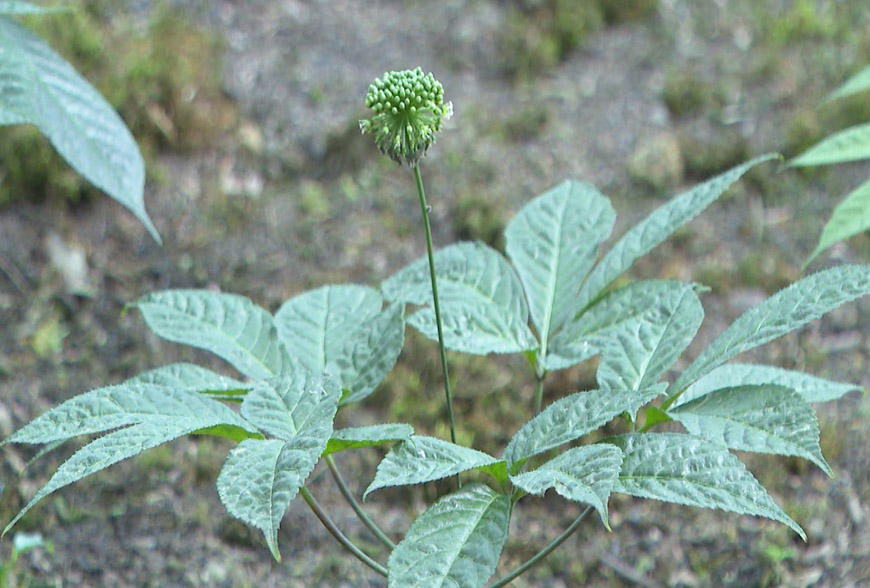
  • Cuống hoa mọc từ giữa thân dài từ 8-10cm. Cụm hoa hình cầu, bán kính 3-4 cm, hoa 5 cánh màu vàng nhạt.
  • Quả dạng hạch, khi chín chuyển từ màu xanh sang màu đỏ cam, với 1 chấm đen không đều ở đỉnh quả.
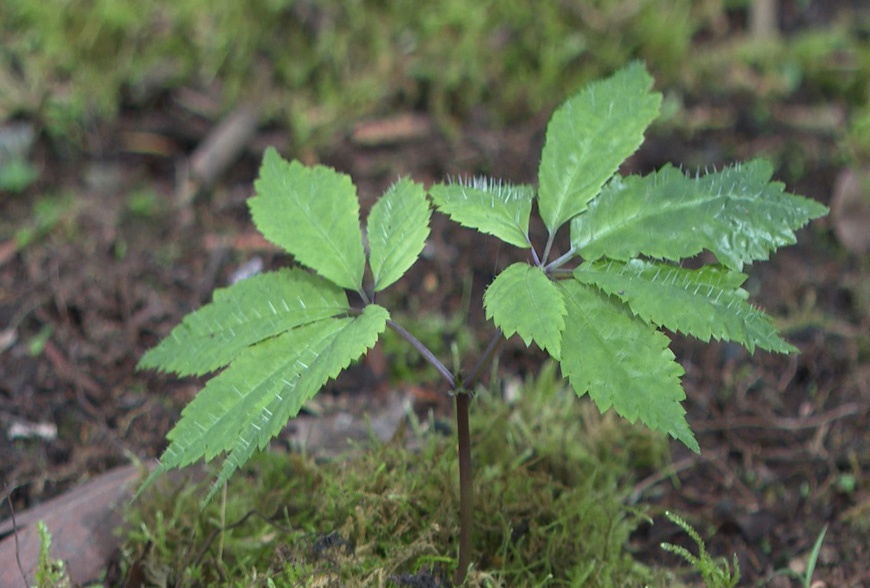
  • Lá hình mũi mác, mọc vòng, thường là 5 lá, (đôi khi 4-6 lá) mép lá có răng cưa, hai mặt có lông mảnh và cứng.
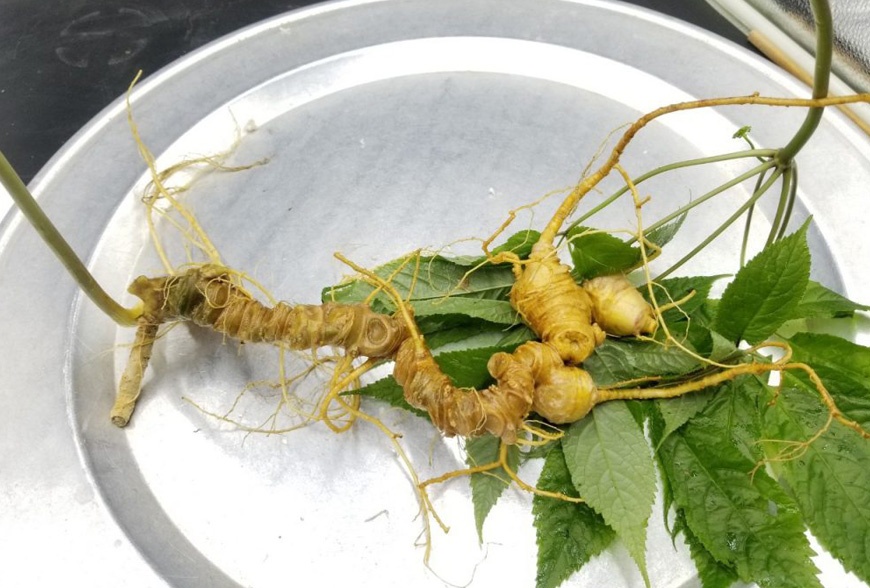
  • Củ gồm ba phần: thân rễ, rễ củ và rễ con. Khi nhai thì đều có vị đắng nhưng hậu ngọt.

Mặc dù có nhiều điểm chung thì người sành sâm vẫn có thể phân biệt được dựa vào những khác biệt sau:

Sâm lai châu

+ Phần trên mặt đất

  • Điểm khác nhau nhỏ về hình thái giữa hai loài này là đĩa mật của hoa sâm Lai Châu có màu tím trong khi đĩa mật của hoa sâm Ngọc Linh có màu nhạt hơn. Mùa Hoa cũng muộn hơn sâm Ngọc Linh từ 1 – 2 tháng.
  • Chiều cao trung bình của sâm tại Lai Châu cao hơn sâm Ngọc Linh và phần thân khí cũng to hơn. Lá dài hơn lá sâm Ngọc Linh.
  • Khi nhai thì lá sâm Ngọc Linh có hậu ngọt hơn và thơm hơn.
  • + Phần dưới mặt đất:

Thân rễ sâm tại Lai Châu thường ngắn có màu xanh, phần rễ củ màu vàng nhạt ( hơi trắng) phát triển có xu hướng hình củ cải và to hơn sâm Ngọc Linh.

Khi cắt phần thân rễ, thì cả hai loại đều có lõi màu vàng, vòng tím ở bên ngoài. Lát cắt rễ củ sâm Ngọc Linh ( Panax Vietnamensis Ha et Grush) thường có màu vàng tươi trong khi rễ củ sâm Lai Châu ( Panax Vietnamensis var. fuscidiscus) có vòng tròn tím nhạt bên ngoài.

Lưu ý:

Để phân biệt sâm Ngọc Linh và sâm Lai Châu cũng không quá khó, tuy nhiên cũng có những củ sâm tại Lai Châu rất giống sâm Ngọc Linh, giống đến nỗi những người sành sỏi cũng khó có thể phân biệt được.

Khi ngửi thì sâm Ngọc Linh có mùi thơm mát, dễ chịu. Còn sâm Lai Châu thì không được thơm bằng, thậm chí hơi ngái. Khi nhai, sâm Ngọc Lình chắc, giòn sâm hơn và vị không đắng bằng, hậu ngọt và thanh thoát. Cho nên nếu được ăn thì người có kinh nghiêm sẽ phân biệt được chính xác mà không cần tốn tiền và thời gian kiểm định nữa.

  • Digg
  • Del.icio.us
  • StumbleUpon
  • Reddit
  • RSS

Top 10 Medicinal Plants And Their Significance In Modern Life


People say there is a herb for every ailment in the world, and our greenery enthusiasts will tell you that they are right. Nature has bestowed upon us its grace through endless plant species that aid us in staying healthy & lively. Moreover, the ease of gardening in our backyards, balconies, and terraces has opened several doors to encourage growing medicinal plants nearby.

Excited to grow your personal medicinal garden? Well, wait a minute; let’s brush up on our concepts about restorative greenery before bringing them home.

What are Medicinal Plants?

Medicinal plants carry several healing properties in their being that aids us humans in overcoming various diseases. From something as minor as treating the common cold to dealing with a complex nervous system, these green buddies tackle many major and minor ailments.

In fact, our grandparents know their value better than us since herbs were their go-to home remedies before modern medicine’s expected availability stepped into the picture.

Medicinal Plants

These plants are also not that rare, as they are easily found on the online market and offline nurseries, so more & most people can benefit from them. They are easy to propagate, maintain, and harvest. The healing plants find a welcoming place in the culinary & cosmetic industry. Once propagated at home, you can utilize them while they gorgeously grace your ambiance.

Top 10 Medicinal Plants in India and their Uses

The cultivation of medicinal plants is a great way to enhance the greenery quotient while ensuring better health prospects. There are endless varieties of medicinal plants online, so picking the most suitable ones for your garden can sometimes be a task. But don’t worry, down below is a list of the best medicinal plants and their uses for you to select accordingly:

1. Holy Basil

Locally called Tulsi, this plant had to be on top of this list. It is known globally for its medicinal powers and across the nation for its religious value. While we Indians worship it with diyas and incense sticks, the plant returns generously with its healing properties.

So, the Holy Basil is often seen in the kitchens, brewing with the Chai leaves or in a healthier concoction. One of its most common variants, the Rama Tulsi, is known for its grace in removing severe coughs & colds. You can grow it in spiritual-looking terracotta pots with rich soil.

Several herbal toiletries are manufactured with Karpura Tulsi as their primary healing agent. Overall, this plant can cure malaria, headache, insomnia, respiratory diseases, etc. Some people also prefer wearing Tulsi beads, enhancing their physical and mental health.

2. Calendula

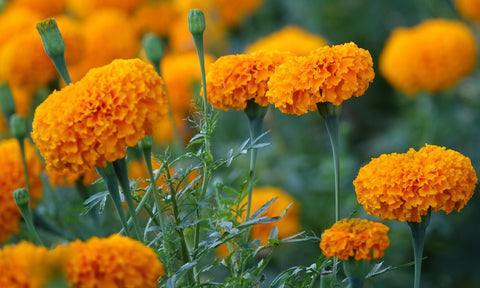
A flowering variety that comes in decorative plant seeds packages, it is typically known as the Marigold. It stays low-maintenance in the preference for soil, accepting the worst of them as long as they are filled with moisture. However, that should not deter you from propagating the Calendula in a nutritious potting mix.

Apart from producing gorgeous orange-hued flowers, the plant imposes an extreme value in the derma industry. It readily cures sprains, sore eyes, wounds, stings, etc., when applied externally, and the healing tea will benefit fevers, blood circulation, and chronic infections. Propagate it in rectangular plastic pots to see the flourishing with more flowers.

Calendula

3. Aloe Vera

Being a succulent, this green buddy is a hero in the hardy plants' category. Aloe vera grows with thick leaves, carrying the Superman of the saps that are incredibly beneficial for our health. Pick a thick leave and open it up to remove the jelly-like white substance; you can use it in health drinks to cure inflammations from the inside, and it will turn out superb in face packs to lead you to a filter-free tone.

Not only that, you can use the sap to treat wounds and cuts as well. When ingested as a healthy beverage, it will prepare your digestive system for a less irritated lifestyle and can even cure chronic constipation, making way for a better appetite. It lends a rugged vibe to the garden when grown in aesthetic floor planters. Plus, its flexibility allows one to grow it indoors on the balconies and the peeking windowsills.

4. Sage

We are unsure if the Sage word came from this plant or if the Sages gave it the same name as themselves to point out its pure qualities. Whatever it is, the Latin term ‘Salvia’ literally means ‘healing,’ and that’s where the English word Sage comes from. A favorite in the medicinal greenery, it picks feminine ailments like menopausal issues, unending lactation, and sterility. Besides this, it also acts as a mood booster for anxiety and depression.

The Sage plant also reduces liver issues, excessive salivation & perspiration, but if you are dealing with skin issues like inflammations and insect bites, use it externally. From mouth inflammations to vaginal problems, it will give you more comfortable health. It can also promote better heating power in the digestion system, enhancing gut health.

This green buddy is also revered for its pure vibrations in the spiritual world, as people burn its leaves to spread a positive aura with its aromatic fragrance and serene vibrations with its incense-like smoke. Burn it in the evening and enjoy the peaceful aura without negative vibrations.

Sage

5. Fenugreek

Chefs worldwide call it Fenugreek, while Indians know it by the Hindi name called Methi. This plant’s seeds, locally known as Methi seeds, aid us in several ways. From treating inflammations in the ulcers to keeping the liver safe to enhancing digestion to making weight gain easy, this plant is a boon to Ayurvedic science.

It is also a boon for females, as it eases the cramps caused by menstruation and labor. Also, if one is having a bad breath issue, then these seeds will work miracles in altering the mouth odor. In fact, these are often used when someone has lost their mouth’s taste buds, perhaps after vomiting. Some people also use them in hair masks, as they promote strong hair growth with a glossy shine.

6. Ashwagandha

An oldy in the medicine world, this plant is as ancient as we can trace back; since then, it has been used in Ayurvedic science for its varied benefits. Its ingestion in measured doses leads to a more robust immune system, which is its more commonly known use after the pandemic struck.

Apart from boosting immunity, it helps in bettering cholesterol levels, reducing anxiety and stress, promoting vision, regenerating brain cells, and keeping the heart young. It is pretty normal to see healthy tonics infused with this herb, as it vouches for better health and well-being. Moreover, these days people even make ashwagandha-infused hot chocolate to satiate their taste buds and keep their bodies warm.

7. Stevia

It’s impossible to live in today’s diet-conscious world without hearing the term ‘Stevia.’ The advertisements are enough to make us aware of this product’s magical sweetness that is three hundred percent more potent than the primary sugar and a lot healthier, too.

This plant is super beneficial for people with diabetes, as they can fulfill their sugar cravings in a controlled manner using this herb instead! Also, due to its low-calorie content and low carbohydrate profile, it is pretty famous among health fanatics who wish to keep a check on their calories. One may enjoy the taste of sugar without hampering their blood glucose levels.

Stevia

8. Chamomile

This flowering herb is gaining popularity in modern culture as more and more people are choosing natural ways of enhancing their physical health. Chamomile tea, for instance, is a favorite among people dealing with insomnia because it promotes relaxation and sleep.

Besides, the plant is also helpful in aiding digestion and treating regular aches concerning teeth, ears, etc. Not only that, but it is also an essential component in the aroma industry, primarily used in candles, so those who don’t like its taste can still benefit from its serene fragrance. The plant gets pregnant with white-petalled blooms carrying a yellow sun-like center.

9. Tea Tree

The name has a tree in it, but don’t worry, this plant won’t take much space and can be easily planted in ceramic pots to maintain aesthetics. However, one may also let it grow big into a shrub. Its usage as a medicinal plant dates back to ancient times, when people often used it for treating their headaches. Its bark is also used for wrapping as a bandage, molding into a sleeping mat & raincoat, etc.

The widely-known tea tree oil is manufactured from this plant’s leaves and twigs. The oil’s anti-fungal and anti-bacterial skills make it valuable in the cosmetic industry for treating acne and other skin-related issues. The tea tree oil also helps calm the skin from cold sores, burns, infections, etc. More and more cosmetic products are noticing a need to involve this plant in their products.

10. Lavender

Lavender

What’s better than a herb plant? A herb that blossoms with bright-colored flowers, lavender is one such gorgeous beauty that enhances the beauty around while proving beneficial for physical and mental health. You may grow them in grow bags, too, and once propagated, wait for them to burst with pretty blooms, and they are ready for harvesting.

One may sprinkle these flowers over a salad, infuse them in the lemonade, or experiment with some other way to include them in one’s diet. This plant, however, is more famously known for its brilliant fragrance, which feels as sweet as a sugar cookie. Lavender-infused candles, incense sticks, and perfumes are appreciated for their stress-releasing effects.

What is the Importance of Medicinal Plants?

After knowing the uses of medicinal plants, another question arises - the advantages of medicinal plants. Although their uses justify their existence enough, here’s some more emphasis on their overall presence:

★ There is no such thing as too much greenery, so when you propagate different medicinal plants, they will not only prove beneficial in terms of what their name suggests, but they will also enhance the overall ambiance with their presence.

Importance of Medicinal Plants

★ Medicinal plants are beneficial to the environment as well, as more greenery indicates a healthier ambiance that stays cool and promotes better airflow around.

★ These plants are pretty easy to grow, so if you are looking for some low-maintenance green buddies, these herbs are ready to shake hands with you.

★ There is an endless list of diseases that come under these plants’ jurisdiction. From something as ordinary as a cough to something as terrible as labor pain, these plants are the closest to the superheroes.

★ Catching a common cold and dealing with chronic conditions is something that most of us have experienced at least once. It’s always better to use natural remedies over chemical ones. Just a friendly reminder: we are not discouraging the use of pharmaceuticals.

★ Some of these plants are also beneficial to use without any diseases, just to protect your body from potential diseases. Their usage in moderate doses will be advantageous for your long-term health, be it physical or mental.

Benefits of Medicinal Plants

Overall, all medicinal plants name have gained that title to belong in the healing industry due to their significant value for our physical health. Their propagation will lead to a greener environment, acting as your go-to medical shop when you face bodily troubles. Moreover, with the increasing focus on improving our mental health, we can utilize these plants as a cheap therapy; both their propagation and usage can lower stress levels in no time.

Moreover, online shopping for medicinal plants is as easy as brushing our teeth - hop on our online gardening website and shop from the medicinal plants list to create your herbal garden, and that too at reasonable rates! What a worthy investment!

FAQs About Top Medicinal Plants in India

Ques: Which Components Give Healing Properties to Medicinal Plants?

Ans: Specific active components like alkaloids, essential oils, phenolic compounds, and triterpenoids are responsible for making the healing plants medicinal.

Ques: How Ancient are Medicinal Plants?

Ans: Medicinal plants have been used by humans since the Sumerian civilization, i.e., the three thousand BC. Several herbs are listed in the ancient data for curing endless ailments.

Ques: Are Medicinal Plants Used in the Pharmaceutical Industry?

Ans: Yes, several herbs are used to manufacture medicines. Also, these plants are a primary component of the Ayurvedic method of healing ailments.

Ques: Should I Depend on Medicinal Plants?

Ans: Medicinal plants work as an excellent home remedy for some diseases; however, we suggest consulting an expert before ingesting them and whether you should depend on them for your treatment.

Ques: Are Medicinal Plants Online Authentic?

Ans: Yes, you can purchase medicinal plants from the comfort of your couch through any internet-connected gadget. These plants available in online gardening stores like ours are a hundred percent authentic and healthy.

  • Digg
  • Del.icio.us
  • StumbleUpon
  • Reddit
  • RSS

Why Is Dong Quai Called the ‘Female Ginseng’? - Sâm đương quy


What is dong quai?

Angelica sinensis, also known as dong quai, is a fragrant plant with a cluster of small white flowers. The flower belongs to the same botanical family as carrots and celery. People in China, Korea, and Japan dry its root for medicinal use. Dong quai has been used as an herbal medication for more than 2,000 years. It’s used to:

  • build blood health
  • boost or activate blood circulation
  • treat blood deficiency
  • regulate the immune system
  • relieve pain
  • relax bowels

Herbalists prescribe dong quai to women who need to “enrich” their blood. Enriching, or nourishing, your blood means to increase the quality of your blood. Women may find the most benefits from dong quai after having a baby or during and after menstruation for issues like premenstrual syndrome (PMS), menopause, and cramps. This is why dong quai is also known as the “female ginseng.”

Dong quai is also called:

  • Radix Angelica Sinensis
  • tang-kui
  • dang gui
  • Chinese angelica root

There’s little scientific evidence about the direct benefits of dong quai. The herb is more of a therapeutic remedy and should not be used as first-line treatment. Ask your doctor about any concerns or potential side effects, especially if you’re taking medication.

Increasing research shows that there may be scientific connections between dong quai’s uses and its claims. But there aren’t many well-designed Western-style trials to form a clinical conclusion. The proposed effects may be due to dong quai’s trans-ferulic acid and ability to dissolve in fats and oils as an essential oil. These components may have anti-inflammatory effects and decrease blood clotting.

People who may find benefits in dong quai are people with:

  • heart conditions
  • high blood pressure
  • inflammation
  • headaches
  • infections
  • nerve pain
  • liver or kidney problems

In Chinese medicine theory, different parts of the root may have different effects.

Root partIndicated uses
Quan dong quai (whole root)enrich the blood and promote blood flow
Dong quai tou (root head)promote blood flow and stop bleeding
Dong quai shen (main root body, no head or tails)enrich the blood without promoting blood flow
Dong quai wei (extended roots)promote blood flow and slow blood clots
Dong quai xu (finer hair-like roots)promote blood flow and relieve pain

Seven foods that are good for high blood pressure »

Promoting healthy blood circulation

The available data on how your body absorbs and excretes dong quai suggest that dong quai may improve blood circulation and relieve pain. ResearchTrusted Source has also found that water and ethanol extracts from dong quai effectively decreased fat accumulation. Excess fatty tissue can increase your risk for type 2 diabetes and heart disease.

One 2005 study reported an increase of blood flow and drop in blood pressure in a dog, cat, and rabbit after injecting dong quai root oil, according to the European Medicines Agency.

Potential role in cancer treatment

Dong quai extracts have the potential to stop the cell cycle and cause cell death in cancerous cells. ResearchTrusted Source suggests that dong quai can potentially kill cancer cells for brain tumors, leukemia, and colon cancer. But others studies note that there isn’t significant impact against cancer cells, especially in humans.

A 2011 study found that taking dong quai can be effective in reducing the incidence of anemia — low red blood cell count — in people with cancer.

The near-universal uses for the herb mean that men and women take it for many reasons. Always talk to your doctor before taking the herb. It may cause side effects with other medications you may be taking.

As the “female ginseng,” dong quai is popular for many women who have:

  • pale and dull complexion
  • dry skin and eyes
  • blurry vision
  • ridges in their nail beds
  • frail body
  • rapid heart beat

Soothing menstrual cramps

Women who experience abdominal cramps due to their period may find dong quai soothing. Ligustilide, a component of dong quai, is shown to promote nonspecific antispasmodic activity, especially for uterine muscles. Dong quai may also help regulate your menstrual cycle, although there’s little evidence for this.

A 2004 study showed that 39 percent of the women who took a concentrated dose of dong quai twice daily reported an improvement in their abdominal pain (such that they didn’t need painkillers) and a normalizing of their menstrual cycle. The majority (54 percent) thought that the pain was less severe but still needed painkillers to do day-to-day tasks.

Home remedies for menstrual cramps »

But the study wasn’t balanced, and the results were too similar to the control group to conclude that dong quai directly affects menstrual pain. It’s possible that dong quai simply has a placebo effect.

Menopause

Some people take dong quai to treat hot flashes. However, a 2006 studyTrusted Source published in the journal American Family Physician also concludes that more research needs to be done on dong quai’s effectiveness in treating hot flashes. In one randomized controlled trial, which lasted for over a year, there was no significant difference in women who took a hot flash management product with dong quai as an ingredient.

Side effects in women

The American Pregnancy Association considers dong quai unsafe because it stimulates the muscles of the uterus, which could possibly lead to miscarriage. This herb also has some sedative and sleep-inducing effects, so it’s not recommended to use it during breastfeeding. Not using it during pregnancy and breastfeeding is the safest way to know it won’t affect your baby.

Dong quai may also act like estrogen in your body and affect hormone-sensitive conditions that worsen when exposed to estrogen, such as breast cancer.

There’s also no scientific evidence about dong quai’s potential to boost your fertility. Studies show that dong quai can thicken the lining of the uterus, although this was only tested in rats.

Because the U.S. Food and Drug Administration (FDA) doesn’t regulate dong quai, its side effects aren’t as well known as those of prescription medicines. However, there are some confirmed side effects and interactions based on its 2,000-year history as a supplement. These include:

  • difficulty breathing
  • drop in blood pressure
  • drowsiness
  • fever
  • headaches
  • increased bleeding risk
  • low blood sugar
  • stomach upset
  • sweating
  • trouble sleeping
  • vision loss

People who are allergic to plants in the carrot family, which includes anise, caraway, celery, dill, and parsley, shouldn’t take dong quai. Dong quai is in the same family as these plants and could cause a reaction.

Other medications dong quai may potentially react with include:

  • birth control pills
  • disulfiram, or Antabuse
  • hormone replacement therapy
  • ibuprofen, or Motrin and Advil
  • lorazepam, or Ativan
  • naproxen, or Naprosyn and Aleve
  • topical tretinoin

Blood thinners like warfarin, or Coumadin in particular, can be dangerous with dong quai.

This list isn’t comprehensive. Always talk to your doctor before starting to take it, and read the manufacturer’s recommendations carefully about how much to take.

You can find most Chinese herbs in:

  • bulk or raw form, including roots, twigs, leaves, and berries
  • granular forms, which can be mixed with boiling water
  • pill form, to be mixed with other herbs or sold solely as dong quai
  • injection form, typically in China and Japan
  • dried form, to be boiled and strained as tea or soup

Dong quai is rarely taken on its own. The idea behind traditional Chinese herbal medicine is that herbs work together, as one herb can counteract the side effects of the other. As such, herbalists usually prescribe a combination of herbs to target unique and individualized health needs. Buy from a trustworthy source. The FDA doesn’t monitor quality and some herbs can be impure or contaminated.

An herb commonly utilized with dong quai is black cohosh. This herb is also used to reduce symptoms associated with menstruation and menopause.

A trained practitioner can monitor your signs and symptoms and tell you if dong quai is right for you. Read labels carefully as this could impact the dosage you commonly take.

Dong quai is a supplement that has proposed benefits for blood health and may have an effect on slowing cancer growth. While it’s been used in Chinese medicine for over 2,000 years, there aren’t many scientific studies to show that dong quai can significantly improve your blood health. Talk to your doctor before taking dong quai, especially if you’re taking other medications. Discontinue dong quai and visit a doctor if you experience any type of easy bleeding, such as bleeding gums or blood in your urine or stool. Avoid using dong quai if you’re pregnant, breastfeeding, or trying to conceive.


  • Digg
  • Del.icio.us
  • StumbleUpon
  • Reddit
  • RSS